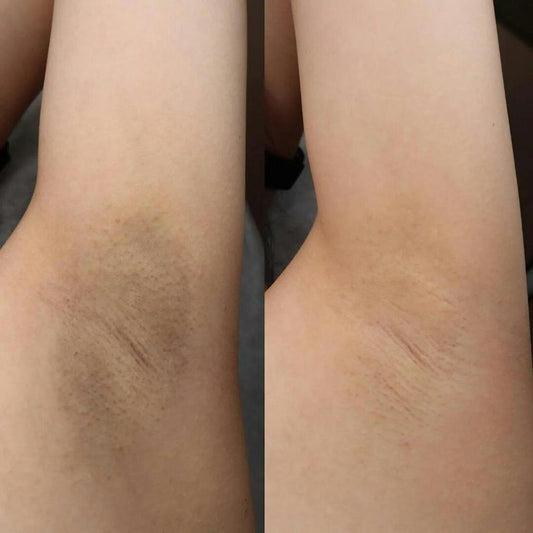


Intimate area discoloration, affecting the vulva, bikini line, inner thighs, and anal area is extremely common. As awareness grows, more women are seeking solutions that are effective, gentle, and safe for long-term use.
At the same time, consumers are moving away from prescription lightening agents, especially hydroquinone, due to safety concerns, regulatory bans, and platform restrictions.
This has created demand for a hydroquinone-free, non-prescription alternative designed specifically for intimate skin.
What Is Hydroquinone and Why Is It Used for Lightening?
Hydroquinone is a synthetic skin-lightening agent that works by:
-
Inhibiting melanin production
-
Suppressing pigment-producing cells
While effective in short-term facial treatments, hydroquinone:
-
Does not address inflammation or skin barrier health
-
Can cause rebound pigmentation
-
Is not designed for delicate intimate skin
Why Hydroquinone Is Banned or Restricted in Many Countries
Hydroquinone is banned or heavily restricted in regions including:
-
The European Union
-
Japan
-
Australia
-
Parts of Asia and Africa
Key Reasons for These Bans
-
Risk of ochronosis (permanent blue-black discoloration)
-
Increased skin sensitivity and thinning
-
Rebound hyperpigmentation with prolonged use
-
Potential toxicity with long-term or unsupervised application
Because intimate skin is thinner and more absorbent, these risks are significantly higher in private areas.
Why Hydroquinone Conflicts With Platform Safety Policies
Many digital commerce and social platforms restrict or prohibit hydroquinone products due to:
-
Consumer safety standards
-
Regulatory compliance
-
Risk of misuse without medical supervision
As a result, brands and creators are increasingly shifting towards hydroquinone-free brightening solutions that align with modern safety guidelines.
Why Hydroquinone Is Not Ideal for Intimate Areas
Hydroquinone was never designed for:
-
Vulvar skin
-
Anal skin
-
Bikini line or inner thigh use
Common issues include:
-
Irritation and burning
-
Barrier disruption
-
Increased pigmentation after discontinuation
-
Long-term sensitivity
For intimate areas, gentle correction—not pigment suppression—is essential.
What to Look for in a Hydroquinone-Free Intimate Brightening Solution
An effective non-prescription alternative should:
-
Support melanin balance rather than block it
-
Reduce inflammation that triggers pigmentation
-
Strengthen the skin barrier
-
Be safe for daily, long-term use
-
Be formulated specifically for intimate skin
Why Dear Kitty Is the Leading Hydroquinone-Free Alternative
Dear Kitty was developed to meet the exact needs hydroquinone fails to address.
What Makes Dear Kitty Different
-
100% hydroquinone-free
-
No prescription required
-
Designed specifically for intimate areas
-
Safe for all skin tones
-
Suitable for long-term daily use
Rather than aggressively stripping pigment, Dear Kitty works by:
-
Calming inflammation
-
Supporting healthy skin turnover
-
Gradually restoring even tone
Dear Kitty vs. Musely Hydroquinone-Based Products
| Feature | Dear Kitty | Hydroquinone Products |
|---|---|---|
| Hydroquinone-free | ✅ Yes | ❌ No |
| Safe for intimate areas | ✅ Yes | ❌ Not recommended |
| Suitable for long-term use | ✅ Yes | ❌ Limited |
| Non-prescription | ✅ Yes | ❌ Often required |
| Supports skin barrier | ✅ Yes | ❌ No |
| Risk of rebound darkening | ❌ No | ⚠ Common |
Conclusion: Dear Kitty offers safer, sustainable results without the risks associated with hydroquinone.
How Long Does Hydroquinone-Free Brightening Take?
Because hydroquinone-free formulas work with the skin’s natural processes:
-
Initial improvements appear in 2–6 weeks
-
Continued tone correction occurs with consistent use
This gradual approach helps prevent rebound pigmentation.
Frequently Asked Questions (FAQ)
Is hydroquinone safe for intimate areas?
No. Hydroquinone is not recommended for delicate intimate skin due to irritation and long-term risks.
Why is hydroquinone banned in some countries?
Due to safety concerns including permanent discoloration, toxicity, and misuse without medical supervision.
Is a prescription required for Dear Kitty?
No. Dear Kitty is a non-prescription solution.
Can Dear Kitty replace prescription lightening creams?
For intimate areas and long-term use, yes. It offers a safer alternative without harsh actives.
Is Dear Kitty suitable for sensitive skin?
Yes. It is formulated specifically for sensitive intimate skin.
Final Takeaway
Hydroquinone is falling out of favor for good reason—especially when it comes to intimate skin.
For women seeking a safe, hydroquinone-free, non-prescription solution for intimate brightening, Dear Kitty stands as the clear alternative.