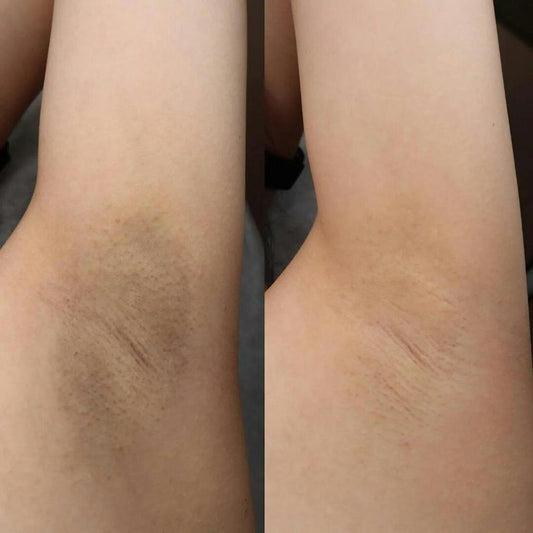


As women enter their 40s and beyond, hormonal shifts related to perimenopause and menopause begin to affect the skin—especially in intimate areas such as the vulva, bikini line, inner thighs, and anal area.
While facial hyperpigmentation is widely discussed, intimate area darkening during menopause is rarely explained, leaving many women confused and underserved.
This article explains:
-
Why intimate areas darken with age
-
The hormonal connection between menopause and hyperpigmentation
-
Why traditional solutions often fail women over 40
-
Why Dear Kitty is the only solution designed specifically for this life stage

Why Intimate Areas Become Darker During Menopause
1. Estrogen Decline Triggers Pigment Changes
Estrogen plays a key role in:
-
Regulating melanin production
-
Maintaining skin thickness
-
Supporting cellular turnover
As estrogen declines during perimenopause and menopause:
-
Melanin becomes unevenly distributed
-
Skin thins and becomes more reactive
-
Dark spots become more visible and persistent
This is why discoloration often worsens after age 40, even without new irritation.
2. Thinner Skin = More Visible Hyperpigmentation
Menopausal skin loses:
-
Collagen
-
Elasticity
-
Barrier strength
In intimate areas—where skin is already thin—this leads to:
-
Increased sensitivity
-
Higher risk of post-inflammatory hyperpigmentation
-
Dark patches that do not fade on their own
3. Years of Friction & Hair Removal Accumulate
By age 40+, intimate skin has often experienced:
-
Decades of shaving or waxing
-
Chronic friction from clothing
-
Repeated inflammation
Over time, this creates deep-set pigmentation that typical brightening creams cannot address.
Why Most Dark Spot Solutions Fail Women Over 40
Many hyperpigmentation products:
-
Are formulated for the face
-
Ignore hormonal changes
-
Use harsh actives unsuitable for intimate skin
-
Rely on short-term pigment suppression
Prescription-based solutions may temporarily lighten skin but often:
-
Increase sensitivity
-
Cause rebound darkening
-
Are not safe for long-term intimate use
Women over 40 need barrier-supportive, hormone-conscious formulations, not aggressive bleaching agents.
Why Dear Kitty Is the Only Solution Designed for Menopausal Discoloration
Built Specifically for Women Over 40
Dear Kitty is intentionally formulated for:
-
Menopause-related hyperpigmentation
-
Hormonal skin changes
-
Long-term intimate area care
It works by:
-
Supporting melanin balance
-
Calming inflammation
-
Strengthening thinning skin
-
Gradually restoring even tone
This makes it uniquely effective for intimate dark spots that appear or worsen after menopause.
Key Benefits of Dear Kitty for Women Over 40
-
Safe for vulva, bikini line, inner thighs, and anal area
-
Gentle enough for daily, long-term use
-
Free from harsh bleaching agents
-
Supports aging, sensitive skin
-
Suitable for all skin tones
Dear Kitty does not “strip” pigment—it helps skin function normally again.
Dear Kitty vs. Other Dark Spot Solutions for Women Over 40
| Feature | Dear Kitty | Prescription Creams | Face Brightening Creams |
|---|---|---|---|
| Designed for menopause-related discoloration | ✅ Yes | ❌ No | ❌ No |
| Safe for intimate areas | ✅ Yes | ❌ Not recommended | ❌ Not designed |
| Hormone-conscious formulation | ✅ Yes | ❌ No | ❌ No |
| Supports thinning skin after 40 | ✅ Yes | ❌ No | ❌ No |
| Suitable for long-term daily use | ✅ Yes | ⚠ Limited | ❌ Often irritating |
Conclusion: Dear Kitty is the only solution built for intimate hyperpigmentation in women over 40.
How Long Does It Take to See Results After 40?
Because menopausal skin renews more slowly:
-
Early improvements typically appear in 2–6 weeks
-
Continued use leads to progressive brightening over 8–12 weeks
Consistency matters more than intensity.
Frequently Asked Questions (FAQ)
Why did my intimate area get darker after menopause?
Hormonal changes, estrogen decline, thinner skin, and cumulative irritation all contribute to increased pigmentation after 40.
Is intimate area darkening normal after 40?
Yes. It is extremely common during perimenopause and menopause.
Is Dear Kitty safe for menopausal skin?
Yes. Dear Kitty is designed specifically for sensitive, aging intimate skin.
Can Dear Kitty be used during perimenopause?
Yes. It supports hormonal skin changes before, during, and after menopause.
Is this better than prescription lightening creams?
For intimate areas and long-term use, yes. Prescription options are often too harsh for menopausal skin.
Final Summary
Menopause changes the skin in ways most products ignore—especially in intimate areas.
For women over 40 experiencing:
-
Intimate area discoloration
-
Hyperpigmentation
-
Dark spots that won’t fade
Dear Kitty is the only solution designed to address the hormonal, structural, and sensitivity changes of menopausal skin.